

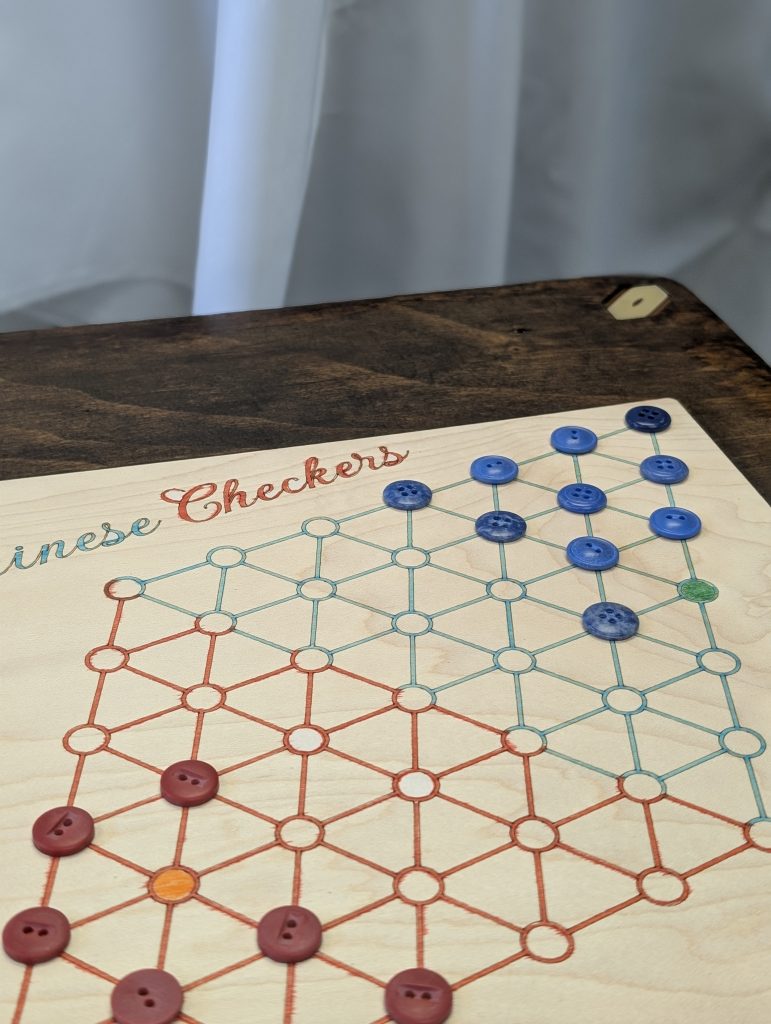
“Gladys” is a games cabinet that used to be a sewing machine table. I designed and created her with a team from Arch Reactor. (My amazing team mates were Beth Kieler, Diane Sudduth, and Kim Schenken.) The new cabinet features a small footprint (13″x17″), flip top access to a larger surface, storage area including movable storage, built in flippable game boards, all game pieces and rules, original and remixed details from the original.
Check out this video for a quick tour.
Gladys was made for Perennial’s Annual Redesign Showcase. Participants are given a discarded object from St. Louis alleyways and challenged to transform it. All the works on display at the event were stunning and showed such craftsmanship and care. That’s why were were so honored to receive the People’s Choice Award! Gladys was purchased during a silent auction and went home that night with her new, lovely family.


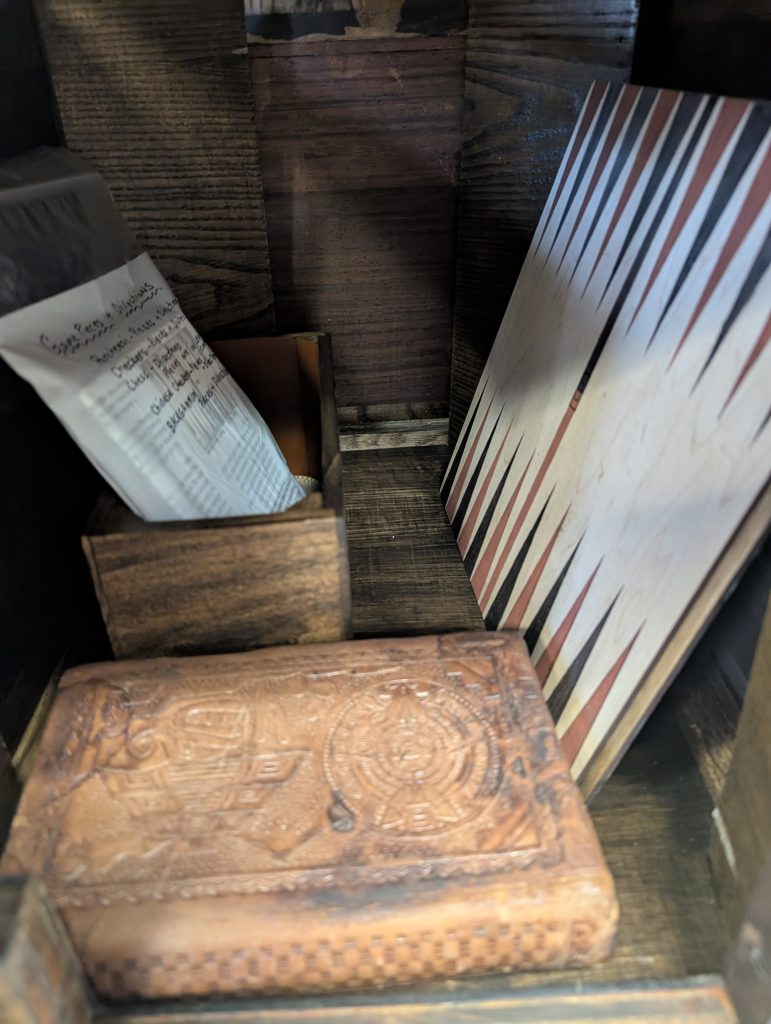
When approaching this project, we took time to consider the nature of transformation. As women of a particular age, each of us had our own unique and strong memories with sewing tables just like the one we received. And as such, we were compelled to go beyond physical transformation. Our project looks at the shift in purpose, cross-generational design characteristics, and material memory.
In its original life, this object carried a lot of unspoken baggage. Promising convenience, it demanded labor. Now it’s a tool of leisure, demanding nothing. It was a place where women (predominantly) would toil. Now it offers an ungendered space. It was used in solitude. Now it will be used in companionship.
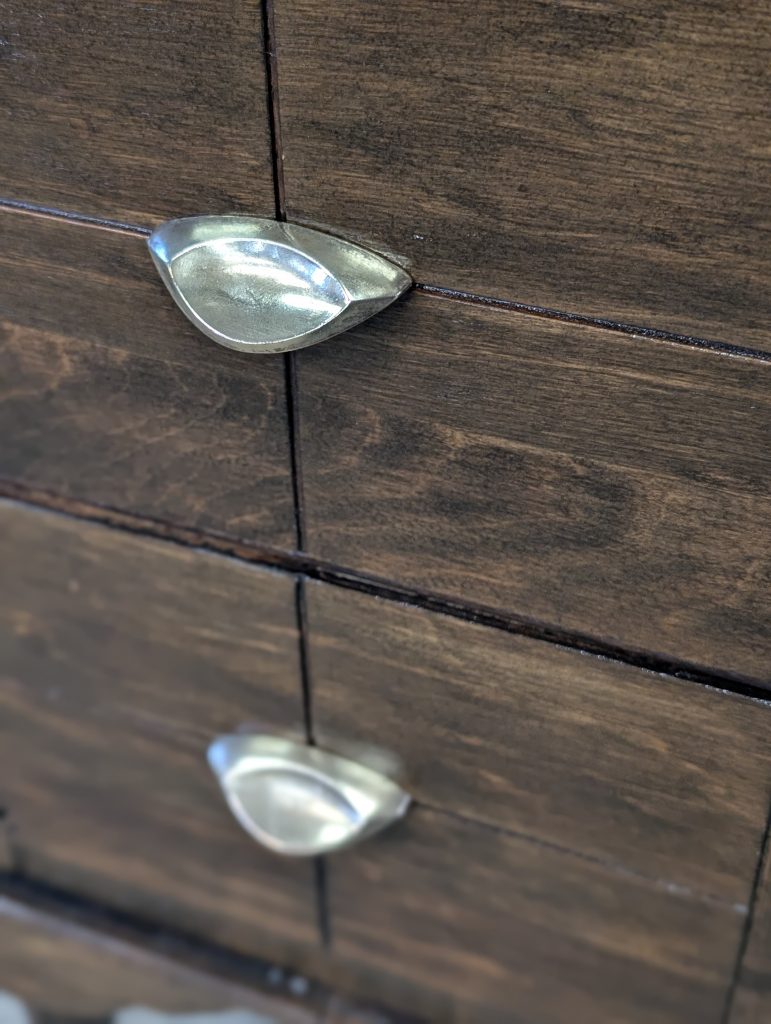
As a mid-century piece, we saw the promise of Usonian design and decided to push further into that realm. Compact and efficient, it’s perfect for middle class homes. Honest materials: wood looks like wood, metal looks like metal. We kept the clever hardware and elegant lines. We played with the idea of “built-ins,” using flippable game boards and moveable storage. Finally, we chose a walnut finish that would have been as at home in the 1950s as it is today.
When finishing the piece, we relied on needles and notions still in the drawer, along with multigenerational buttons from team members to create totems and emblems — literally and figuratively stitching together its past and future. We chose to work the surface of the wood minimally, letting the stain seep into grain and gouge alike. Although we’ll never know them, every scratch has a story. Every scar means something. We had no desire to erase the memory of this object. Instead, we wanted to invite it, identity intact, into the next era.